The Romanian Moldovan reunification, a test of Europe’s dogma of inviolable borders edit
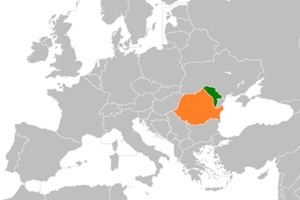
Since 1945, the state phenomenon has been marked by the dissociation of political ensembles – decolonization, the breakup of state unions and empires. The movement toward the voluntary and durable consolidation of states constitutes the exception: Somaliland and Somalia in 1960 to form present‑day Somalia, Tanganyika and Zanzibar in 1964 to form present‑day Tanzania, India and Sikkim in 1975,[1] North and South Vietnam in 1976, North and South Yemen in 1990, and East and West Germany in 1990. Thus, the statement made by Maia Sandu, President of Moldova since 2020, on 12 January 2026 on the British programme “The Rest Is Politics: Leading” on YouTube, in favour of a union of her country with Romania — in reality, a reunification — could not go unnoticed. The officeholder has obviously taken the necessary precautions: she spoke hypothetically and personally; her remarks are therefore not official. Furthermore, no project is underway, this evolution is not the subject of any public debate, and public opinion is not in favour of it. Nevertheless, there is never anything innocent about a head of state’s intervention, all the more so when announcing the disappearance of the very state they preside over.
It is even less innocent that all European leaders have refrained from commenting, diverging markedly from the traditional messages of caution and prudence regarding the evolution of borders on the continent. This dogma rests on a political opposition to change. Even Russia has remained silent on the prospect of its former colony (Russian Empire, 1812–1917; Soviet Union, 1940–1941 and 1944–1991), although it resorts to modifying borders whenever it finds an advantage in doing so, which would not be the case with a Romanian‑Moldovan reunification.
In any case, behind the Moldovan President’s veiled intention lie obstacles — whether on the side of European institutions, the Moldovan and Romanian constitutional orders, or, more broadly, the European geopolitical order. In addition, every intention, each initiative, or each step toward such an evolution — if it were to materialize — would be yet another opportunity and justification for Russia to intervene to prevent it and destabilize further.
The implicit roots of reunification
Romania and Moldova share, for the majority of their populations, the same language, Romanian, the same culture, Romanian, and the same religion, Eastern Orthodoxy. If such elements were sufficient to justify the reunification of peoples within a single state in the 19th century and at the beginning of the 20th century, they are far from it in today’s era. Moreover, any change of state — and more broadly, of borders — in favour of a single people would hypothetically pave the way for claims by other ethnolinguistic groups across borders: the Albanians in Albania, Kosovo, North Macedonia, and Montenegro; the Croats in Croatia and Bosnia‑Herzegovina; the Serbs in Serbia, Bosnia‑Herzegovina, and Montenegro; possibly the Hungarians in Hungary, Romania, Serbia, Slovakia, and Ukraine; and, in the most expansive configuration, the Greeks in Greece, Albania, and Cyprus. If these cases are juridically settled and any change seems improbable, especially among EU member states, one must bear in mind that no situation is eternal. With regard to the EU, although it has no competence in this matter, such a prospect would have political consequences for the Union itself, within its internal organization, among six of its member states (Cyprus, Croatia, Greece, Hungary, Romania, and Slovakia) as well as between these same states and their neighbours, all of which aspire to join the EU. Such a dynamic would also reinforce the Russian discourse justifying its invasion of Ukraine and the unilateral annexation of its territories — viewing Russophone populations as Russians, denying Ukrainian culture as a distinct culture, and treating Ukrainian culture and territory as subordinate elements of a larger Russian whole into which they must ultimately merge.
History might support the ethnocultural argument for reunification in order to highlight common traits. The two countries, in fact, belonged to the same state, informally known as “Greater Romania,” between 1918 and 1940 and between 1941 and 1944. Before that, Romania and Moldova had experienced Ottoman and Russian imperial rule together. Their shared state experience is thus at once distant and brief. These precedents are likewise insufficient to justify a reunification today on the grounds of a “historical right” — a claim that Maia Sandu does not invoke.
The President’s main motivations, veiled yet evident, are the accessions of Moldova to the European Union (EU) and to the North Atlantic Treaty Organization (NATO). The move is driven as much by conviction as by a survival instinct. Since Moldova is incapable on its own of defending itself against an increasingly threatening Russia waging a large-scale war in Ukraine since 2022, merging with Romania would allow it to join these two organizations of which the “country of Dracula” has been a member for two decades. From Russia’s perspective, this would amount to an additional hostile expansion of NATO, which it would have to counter. This is why Maia Sandu, in her speech, is explicit on the Russian threat, but does not mention either the EU or — especially — NATO.
The Romanian‑Moldovan reunification exceeds the framework of relations between two states, which seems to be the only parties concerned — a point Maia Sandu does not address. This merger would inevitably entail an institutional European dimension through the EU and NATO, which would be territorially enlarged by 33,800 km² — a surface area equivalent to that of Belgium. NATO would even gain greater political and strategic weight, insofar as the Treaty on European Union (Article 42, paragraphs 2 and 7) recognizes its fundamental role in collective defence for the 23 member states of both organizations.
European enlargement, an illusory shortcut
The Russian invasion of Ukraine, launched on 24 February 2022, has significantly accelerated the movement toward EU accession by candidate countries. A week after its outbreak, Moldova submitted its application, on 3 March 2022. The EU granted it candidate status on 23 June 2022. This haste was primarily symbolic, signalling inclusion in the liberal, democratic European space vis‑à‑vis an authoritarian and expansionist Russia. Accession negotiations began on 25 June 2024, and a year later, the Moldovan Prime Minister, Dorin Recean, set a target date of 2028 for accession. In the interim, on 20 October 2024, Moldovan voters approved the inclusion in their constitution of their European destiny, albeit by a narrow margin (50.7% in favour, with a turnout of 50.3%).
However, there is a vast gap between this announced schedule and the actual enlargement process. A rapid accession of Moldova to the EU is unfounded and illusory, unless practices are profoundly revised. Austria, Finland, and Sweden joined the EU in 1995, three and a half years after submitting their applications. Those three states enjoyed a level of political, economic, and social development above the average of the Europe‑12 at the time, which explains the speed of the process, by contrast with candidates from the Balkans, Eastern Europe, and the Caucasus compared to the present‑day Europe‑27. By contrast, it took 14 years for Cyprus and Malta to join the EU, in 2004. Albania — whose demographics and living standards are comparable to those of Moldova — submitted its application in 2009, was granted candidate status in 2014, and did not begin negotiations until 2022. To date, the “land of eagles” has not transposed a single one of the 33 chapters of EU legislation and regulation into its national law. In addition, an idea is circulating to proceed with another form of accession, partial and gradual, in order to hasten integration and take a geopolitically explicit turn, consistent with the European Commission’s own stance. Yet two colossal obstacles stand in the way of this apparently simple solution: obtaining agreement among the 27 on an alternative procedure and convincing the candidate states. Faced with the scale of the task, merging with Romania — and renouncing the Moldovan state — would serve as a shortcut, allowing the Moldovan population to save one or two decades of waiting and uncertainty, while immediately benefiting from advantages provided by the EU.
As for NATO, the situation is pretty simple: Moldova is neither a candidate nor can it become one. First, the former “garden of Moscow” from the Soviet era is one of the few states whose constitution (Article 11) both proclaims neutrality and explicitly prohibits the presence of foreign military forces.[2] Second, NATO keeps its doors closed to a state that does not control the totality of its territory. This practice is based on a doctrinal document, the Study on NATO Enlargement, published in 1995, which admits only states that have peacefully resolved their “ethnic disputes,” their “external territorial disputes, including irredentist claims,” as well as their “internal jurisdictional disputes” (Chapter 1, paragraph 6). Moldova fits exactly this description: the territory of Transnistria, populated mainly by Russians, Moldovans, and Ukrainians, hosts a secessionist republic supported — but not recognized — by Russia, as well as a Russian military installation comprising troops and an arsenal in the village of Cobasna.
A reunification above all constitutional
The Romanian‑Moldovan reunification is, above all, a constitutional matter for both parties.
Moldova’s potential dissolution is anticipated in a way that is at once implicit and explicit in its constitution: any issue relating to the sovereignty and independence of the state must be subject to a referendum (Articles 75 and 142). This project could also be justified from a European standpoint, by adopting a broad and partisan — and therefore contested — interpretation. Indeed, the preamble of the Moldovan constitution “reaffirms the European identity of the people of the Republic of Moldova and the irreversibility of the Republic of Moldova’s European path” and “declares the integration into the European Union as a strategic objective of the Republic of Moldova”.[3] From this perspective, merger is legally feasible from Moldova’s viewpoint.
The constitutional dimension of Moldova’s absorption by Romania is broader. As regards the merger proper, the Romanian constitution is less explicit than the Moldovan text. Indeed, “sovereignty belongs to the Romanian people,” for whom referendum is one means of expression among others (Article 2). In addition, a referendum on “issues of national interest” may be organized (Article 90). Unlike the Moldovan constitution, the Romanian constitution does not oblige a direct popular consultation on a question as fundamental as the integration of the Moldovan entity. Hence, the law does not suffice; political will and considerations would prevail for organizing a referendum on the merger.
Alongside stricto sensu merger, there is another central element: the status and protection of ethnic, linguistic, cultural, and religious minorities. Reunification could not lead to a weakening of the rights of these minorities. Moldova recognizes and guarantees their development (Article 10), underlining the use of the Russian language (Article 13). The Romanian constitution is more extensive and explicit. It recognizes 19 minority groups and their rights (Article 6), already existing in Moldova. It also provides for a specific category of law dedicated to them (Article 73), a right to instruction in their language (Article 32), the use of their language with public administration (Article 120), and reserved seats in the bicameral parliament for “organizations of citizens belonging to national minorities” (Article 62). Thus, Moldovan minority groups would gain an extension of their rights by integrating into Romania. On this point, the Romanian constitution facilitates reunification.
Insurmountable internal obstacles
In practice, the obstacles to reunification are as numerous as they are colossal.
From a Romanian perspective, organizing a referendum on the absorption of Moldova would entail institutional consequences. A broad majority of parliamentarians would first be required to validate the holding of such a referendum (Article 151), implying a cross-party political consensus. Although it is conceivable that such a majority might be found, it is highly improbable in light of Romanian politics, characterised by turbulence and instability. The last time a Romanian government lasted a full four‑year legislative term was between 2004 and 2008. Between the end of the Popescu‑Tăriceanu government in December 2008 and the censure of the Bolojan government on 5 May 2026, Romania has experienced 18 governments. After approval in the referendum, new legislative and presidential elections might be scheduled in order to confer new legitimacy on Romania’s political personnel and to immediately include former Moldovans in the new civic body. This is precisely what happened after the German reunification in 1990. This prolonged period of referendum and electoral processes would render Romania even more vulnerable to Russian actions aimed at destabilization, as Russia would be frustrated by the loss of its influence over its former colony. For the record, the Romanian Constitutional Court annulled the presidential election of November–December 2024 (Ruling No. 32 of 6 December 2024), after the first round and before the second, citing various forms of manipulation — without explicitly naming Russia, but implicitly targeting it. A new election was held in May 2025.
From a Moldovan perspective, merger would run up against the treatment of the autonomous territorial unit of Gagauzia, whose particular status is recognized by the constitution (Articles 73, 110, 111) for its Turkish, Orthodox, primarily Russophone, and in part Turkophone, population. In addition to its administrative and ethnocultural specificity, the political choices of the Gagauz diverge from those of the rest of the country. In the legislative elections of 28 September 2025, the overall Moldovan electorate voted 50.2% for the Party of Action and Solidarity, pro‑European and supportive of President Maia Sandu, while the Gagauz cast 82.3% of their votes for the Electoral Bloc of Communists and Socialists, pro‑Russian and supportive of former President Igor Dodon. It is in the light of this political orientation that the following main obstacles must be assessed. The first relates to the maintenance of Gagauzia within Moldova. The Law on the Special Legal Status of Gagauzia, of 23 December 1994, provides for a “right to external self‑determination” if the situation of “Moldova as an independent state” were to change (Article 1‑4). A merger with Romania falls squarely within this scope. For the record, this issue is sensitive, as an unrecognized, separatist Gagauz Republic existed at the beginning of the 1990s. However, the term “external self‑determination” is ambiguous. Does it refer to a referendum on independence from Moldova? A federation, a confederation, or an associated state with Moldova? For Russia, this situation would be an opportunity and a windfall for intervention using its usual methods, including electoral manipulation and the distribution of Russian passports, so as to later claim political and military protection for its new citizens — as it has done in Georgia and Ukraine. The second obstacle relates to Romania’s internal administrative organization. Indeed, the highest level of territorial division in Romania is the county (județ, Article 3), with each county enjoying the same competences. Gagauzia within Romania would imply the loss of its status and rights, to conform to Romania’s territorial framework. Conversely, amending the Romanian constitution to change its unitary and indivisible character — that is, to grant autonomy to a local community — is forbidden (Article 152). Romania and Moldova would thus face a Gagauz impasse that reveals the limits of a constitutional approach to the merger process. As for Transnistria, it does not exist as an administrative entity in the Moldovan constitution. The region over which Moldova no longer exercises authority is designated only through the communes that belong to this space and are endowed with “special conditions of autonomy” (Article 110‑2). These communes are governed by the law of 22 July 2005, whose wording refers to a Transnistrian authority without formally recognizing it. This constitutional grey zone complicates the institutional treatment of this region in the context of merger, including the possibility of an external self‑determination referendum, analogous to Gagauzia’s situation.
The merger crystallized around European geopolitics
The feasibility of merger vanishes above all for politico‑military reasons. Indeed, the incorporation of Moldova into Romania would amount to importing the Transnistrian problem along with Russian troops onto the internationally recognized territory of a NATO member state. Thus, there can be no “new Romania” without a prior settlement of the Transnistrian problem… for which Russia has, since 2012, renounced a peaceful and law‑respecting resolution. For Russia, this would not only provide the ideal pretext for attacking Moldova before reunification becomes effective, but also a motive for direct conflict with the Atlantic Alliance once reunification has occurred. It is highly likely that NATO members would convene in order to exert immense pressure to prevent reunification and avoid a war with Russia. As for the EU, it has no operative doctrine on this issue. Full sovereignty of a state within its internationally recognized borders is neither a criterion for accession nor a condition for membership in the Union. It has already admitted Cyprus as a member, despite the fact that a third of its territory has been militarily occupied since 1975 by Turkey — which maintains around 35,000 soldiers and land‑based military equipment there — and politically by the Turkish Republic of Northern Cyprus, a secessionist entity recognized only by Turkey. Yet Europeans have not deemed it necessary to break off accession negotiations with Turkey, which have been ongoing since 1999. If the EU is unable to enforce respect for its own position vis‑à‑vis its bicontinental neighbour over Cyprus, it would be surprising were the 27 to display courage vis‑à‑vis Russia with Transnistria. For the EU, the path of least resistance would be to avoid the problem and therefore oppose the merger.
However, several scenarios can be envisaged to settle the Transnistrian question. The first would be a military reconquest to end the secessionist republic, that is, to wage war against the Transnistrian army — and against the Russian army. As things stand, Moldova would be incapable of doing so on its own and could not even benefit from a hypothetical foreign military support on the ground, which is forbidden by its constitution. The second would be a negotiated re‑incorporation with the de facto authorities. The status of the region would then be at stake: either it would be absorbed into the Moldovan statutory order (then Romanian), or an autonomous status would be granted, which would constitute an obstacle to the merger of the same magnitude as that posed by Gagauzia. The third scenario would rest on the recognition of Transnistria’s independence. Moldova would then rid itself of its heaviest burden on its path toward merger with Romania and toward integration into European organizations. It is excluded that Moldova would recognize the independence referendum organized by the secessionist authorities on 17 September 2006. Nor can it organize, under its own authority, a referendum on a territory it does not control. Furthermore, a constitutional amendment by referendum would be mandatory, even if the new provisions would have only a transitional effect in practice. In each of these scenarios, political support from Europeans would be indispensable for Moldova, facing a Russia exercising tutelage over Transnistria and capable of obstructing any progress through the maintenance of its army.
The other European‑scale puzzle lies in the borders of Moldova and Gagauzia, in the hypothetical case where the inhabitants of the autonomous region opted for independence. This territory, larger than twice the size of the city of Berlin, is fragmented into four non‑contiguous areas, three of which share a border with Ukraine and two of which are connected by a road to Ukraine without crossing Moldova. As for Moldova, the villages of Alexandru Ioan Cuza, Tvardița, and Valea‑Perjei are separated from the rest of the country, with Gagauzia to the west and Ukraine to the east. The first two villages are accessible only via a road passing through Gagauzia. Since Romania belongs to the Schengen area, the Gagauz would be compelled to accept border controls between different parts of their country, located only a few kilometres apart. There would also arise, in parallel, the question of the visa regime for the citizens of this new republic. What would apply to the Gagauz would also apply to the former Moldavians of these three villages, detached from the continuous territory of the new Romania. There are even Moldovan villages that are accessible solely via Gagauzia, although they belong to the continuous territory of Moldova. In this situation, the drawing of the border and the issue of its crossing would become sources of tension between the new Romania and an independent Gagauzia, providing ample pretexts for Russian intervention.
Finally, there is also the idea that Gagauzia and Transnistria would request their attachment to Russia as soon as their independence were recognized. In that case, Russia would prepare the operation through a constitutional amendment that would integrate the two regions as subjects of its “federal” order (Article 65), as it has already done for five Ukrainian regions. Relying on its own law, Russian propaganda would legitimize a military campaign by branding it as a “reconquest.” In practice, this scenario would be inoperative: Russia would have to pass through Ukrainian territory and then Moldovan territory, which would imply at least their occupation and, at worst, their annexation.
The Romanian‑Moldovan reunification is not only futile, but it would create more problems than it would solve, even if one postulates that the Moldovan and Romanian peoples want to reunite — along with their political elites — in accordance with Wilsonian principles of self‑determination and the freedom of peoples to dispose of themselves. Knowing this, the Moldovan President’s personal opinion serves another purpose, both implicit and concrete: to exert pressure on the EU to accelerate its integration, under a differentiated treatment compared to other candidate countries. It is perhaps for these two reasons that Maia Sandu’s statement has drawn no comments from European or Russian leaders. The President’s personal stance highlights three points. The first lies in the ingenuity of the Soviet Union in drawing inextricable internal borders, allowing the Russia that succeeded it to “divide and rule,” or at the very least to exercise a detrimental influence and to create relationships of dependence. The second addresses the head‑in‑the‑sand policy pursued by the EU and its member states with regard to security, identity, and geopolitics. Indeed, their path of least resistance consists in doing nothing with regard to their own members, to their potential future members, to their partners, and to their enemies — Russia being first among them. The third shows that the dogma of inviolable borders functions above all where it is not threatened, as well as in the preservation of the status quo — in this case, the regional order built by and for Russia, to the detriment of the peoples concerned.
Did you enjoy this article? close



[1] A large‑scale process of state grouping followed the creation of India and Pakistan. The mosaic of states that had been part of British India also gained independence, but disappeared, voluntarily or by force, by merging into Pakistan or India, mainly between 1947 and 1949. Because of its scale and its specific temporal and geographical scope, this phenomenon can be considered separately from other cases of state merger.
[2] Malta (Article 1‑3) is the only state that fulfils both the same conditions as Moldova. The other states proclaiming neutrality only are Austria (Article 9a), Cambodia (Articles 1, 53 and 55), Switzerland (Articles 173‑1 and 185‑1), and Turkmenistan (Preamble, Articles 2 and 9).
[3] The wording of the Moldovan constitutional preamble regarding its European destiny is similar to that adopted by Ukraine since its constitutional amendment of 7 February 2019: “Supporting the strengthening of civil accord on Ukrainian soil and affirming the European identity of the Ukrainian people and the irreversibility of Ukraine’s European and Euro‑Atlantic course.” In addition, the Ukrainian Constitution assigns to the Verkhovna Rada (Article 85, paragraph 5), i.e. the parliament, to the President (Article 102‑3), and to the Cabinet of Ministers (Article 116, paragraph 1‑1), i.e. the Government, the competence to implement “the strategic orientation of the State towards the full‑fledged accession of Ukraine to the European Union and to the North Atlantic Treaty Organization.